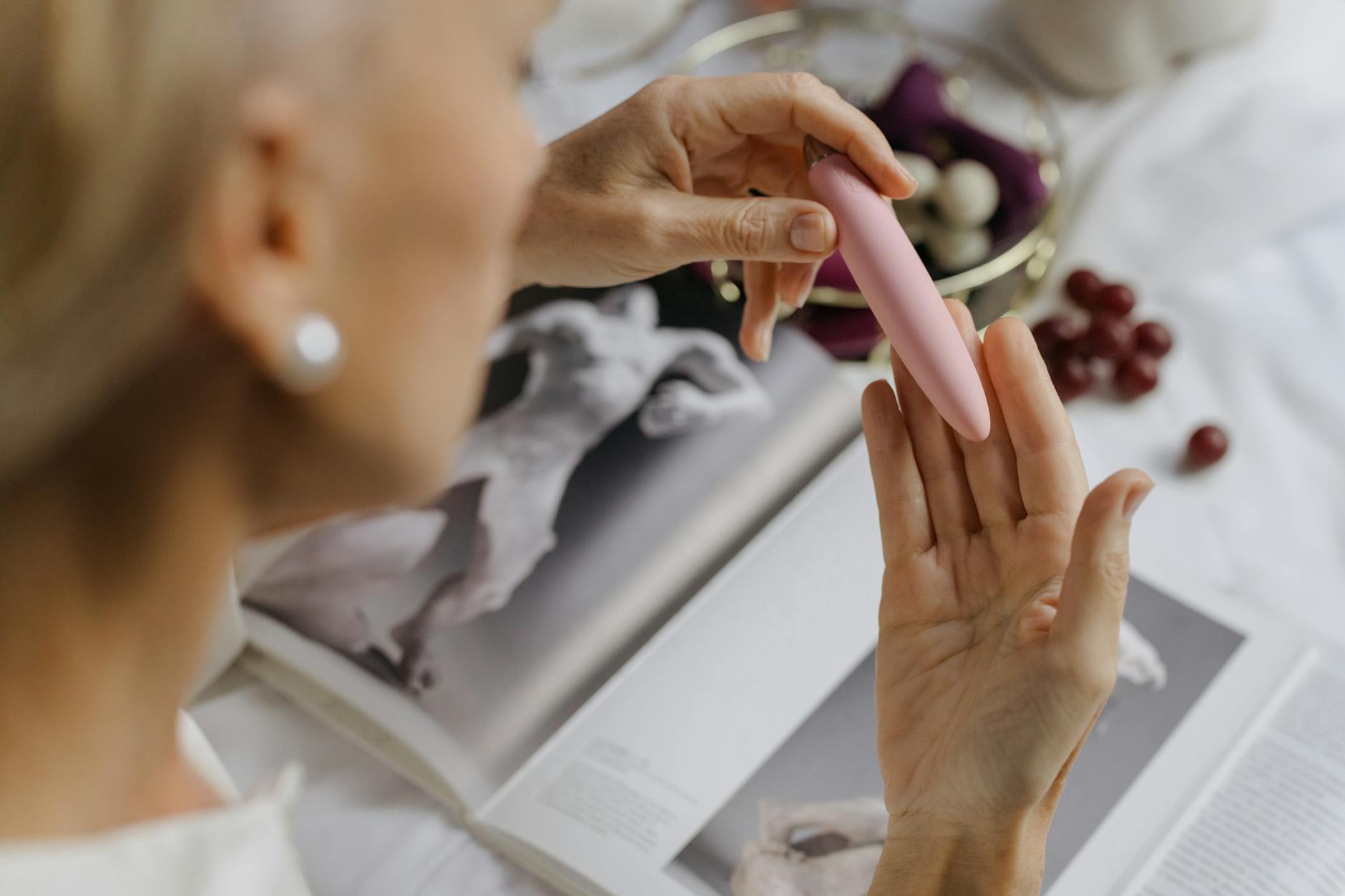
Let's talk about what's actually happening
Your clitoris didn't break. But something shifted. Maybe pleasure used to build quickly, and now it takes longer. Maybe it takes more intensity. Maybe you're not feeling much at all, even when your partner is doing exactly what used to work. That's not failure. That's biology meeting life.
Clitoral sensitivity ebbs and flows. It's responsive to hormones, stress, sleep, medications, and even how much attention you've been paying to your own pleasure. Understanding why this is happening takes the shame out of the equation. Then we figure out how to work with it instead of against it.
Why clitoral sensitivity changes
Three major pathways lead to decreased sensation:
Hormonal shifts. Estrogen affects clitoral tissue thickness and blood flow. When estrogen drops during your cycle, perimenopause, or after stopping hormonal birth control, sensation can feel muted. Thyroid imbalances do the same thing. This one's not in your head.
Medication side effects. Antidepressants, certain antihistamines, blood pressure medications, and even some treatments for ADHD can numb sensation. This is one of the most underreported but fixable reasons clitoral pleasure disappears. If you started something new and sensation dropped shortly after, that's worth mentioning to your doctor. Switching medication timing or dosage sometimes helps without losing the therapeutic benefit.
Chronic stress and nervous system dysregulation. When you're living in fight-or-flight mode, your parasympathetic nervous system (the one that handles arousal) isn't getting a word in. Blood flow to your genitals decreases. Nerve endings feel less responsive. Your body literally can't receive stimulation as well because it's too busy bracing.
Less commonly: nerve compression, undiagnosed health conditions, or years of the same stimulation pattern can also dull sensation. That last one matters. Your clitoris has about 8,000 nerve endings, but they're not all activated equally every time. If you've been using the same toy at the same setting for a decade, your nervous system can habituate. It stops reacting with the same intensity because the signal becomes familiar noise.
How lemon vibrators work differently
The Lemon Clit Sucker and other air-suction toys work on a completely different principle than traditional vibrators. Instead of vibration alone, they use gentle suction that mimics the way hands and mouths naturally stimulate the clitoris. That matters when sensitivity is low.
Here's why: suction wakes up nerve endings in a way that direct vibration sometimes doesn't. It's a different type of sensation entirely. If you've been numb to vibration, suction often reconnects you to pleasure more quickly because it's engaging your tissue in a new way. It's like switching from text to a phone call. Same goal, totally different signal.
Lemon vibrators also create a seal around the clitoris, which builds internal pressure and arousal differently than external vibration. For people dealing with decreased sensation, that difference is often the breakthrough. You're not just getting stronger settings. You're getting a fundamentally different experience.
The reconnection protocol
If sensation has been low for a while, jumping straight to the highest setting won't work. Your nervous system needs to relearn. Here's the approach that works:
Week one: gentleness and patience. Start with the lowest setting on your Lemon Clit Sucker. Spend 15-20 minutes exploring. Don't aim for orgasm. The goal is to notice what you're feeling, however subtle. This rewires your brain to pay attention to sensation again. Many people find their most intense pleasure after menopause or after years of numbness because they've learned to notice the small sensations first. You're rebuilding that attentiveness.
Week two: slow progression. Move to level 2. Same timeframe. Notice if sensation is becoming clearer. Don't rush. If you feel impatient, that's your nervous system saying you're used to overstimulation. Sit with the discomfort of slowness. It's temporary.
Week three onward: explore patterns. Lemon vibrators usually have multiple pulse patterns beyond just intensity levels. Switching between patterns keeps your nervous system engaged. You're no longer habituating to a single signal. Vary which days you use it, what time of day, whether you're alone or with a partner. This also prevents habituation.
Critical: lube and time. Decreased sensitivity often pairs with decreased lubrication. Use a water-based lube generously. More than you think you need. It reduces friction, which can feel harsh on less-responsive tissue, and it helps the suction seal work properly. Budget at least 20-30 minutes when sensation is low. Arousal takes time to build when your system is coming back online.
When to bring a partner in
If you're using a Lemon Clit Sucker with someone else, the dynamic changes how sensation lands. Here's what helps:
Talk about what you're working on. "I'm noticing my sensitivity has shifted, and I'm exploring a different tool" is way less loaded than silence. Your partner doesn't know you're struggling unless you say so. They might be taking it personally, thinking they're not turning you on anymore. Clear that up first.
Consider taking turns with the toy together. You use it on yourself while they watch. They use it on you. This teaches them how it works and takes the pressure off you to perform. Sometimes presence matters more than direct stimulation when sensitivity is low. Being witnessed while you're reconnecting with your own pleasure is its own form of intimacy.
If your partner has been the only source of stimulation, adding a lemon clitoral vibrator into your partnered routine actually deepens connection. You're not replacing them. You're expanding what works. <a href="/blog/how-to-use-lemon-clitoral-vibrator-to-explore-partnered-pleasure-as-a-couple">Exploring partnered pleasure with a new tool can rebuild excitement for both of you</a>.
The medication conversation
If decreased sensitivity started after you began a new medication, don't just accept it. Talk to your prescriber. Some options:
Adjusting the timing of your dose sometimes helps. Taking antidepressants at night instead of morning, for example, can shift when numbness peaks.
Trying a different medication in the same class might restore sensation without losing the therapeutic benefit. SSRIs affect people differently. What numbs one person doesn't necessarily numb another.
Using lemon vibrators alongside medication is also valid. You're not choosing between your mental health and your pleasure. You're building a system that includes both. <a href="/blog/how-to-use-a-lemon-clitoral-vibrator-when-you-are-starting-antidepressants">Starting antidepressants doesn't mean your sexual life is over</a>. It means you're working with new parameters.
The stress piece is real
This deserves its own section because stress is the most overlooked culprit. Chronic stress does something subtle but profound: it narrows your window of tolerance. Your nervous system lives in a high-alert state. The parasympathetic activation required for pleasure becomes harder to access.
You can have the best lemon vibrator in the world, but if your system is dysregulated, sensation will still feel muted. So paradoxically, sometimes the solution isn't using the toy more. It's addressing what's keeping you tense.
What helps: regular movement (walking, dancing, anything that feels good), actual rest (not scrolling in bed, but sleep and quiet), and sometimes professional support. <a href="/blog/how-to-use-lemon-vibrators-for-better-sensation-when-anxiety-affects-arousal">Anxiety and reduced sensation are deeply connected</a>. You're not broken if this applies to you. You're noticing something true about how your body works.
Using your Lemon Clit Sucker in a context where your nervous system is already regulated helps tremendously. That might mean scheduling it, creating a ritual around it, or making sure you're alone and unrushed. Signal safety to your system first. Sensation follows.
What to expect in the reconnection timeline
Everyone's different, but patterns emerge. Most people notice subtle shifts within 2-3 weeks of consistent, patient use. Real reconnection often takes 4-8 weeks. That's not long compared to how long you might have been numb.
You might feel frustrated at first. You might think nothing's working. Then suddenly, a small sensation you didn't expect hits you. That's the moment to pause and celebrate. Your nervous system is waking up.
Orgasm might take longer to arrive. You might find that pleasure looks different than it used to. That's not loss. That's evolution. Some people report their strongest orgasms after they've gone through this reconnection process because they're fully present in sensation instead of chasing it.
People also ask
Can decreased clitoral sensitivity become permanent?
No. Sensation is responsive. It changes based on everything: hormones, stress, attention, novelty, and tools. Even if sensitivity has been low for years, reconnection is possible at any age. The nervous system is plastic. It learns and adapts. Using lemon vibrators strategically, addressing underlying causes like medication side effects or stress, and giving your system time to reset all contribute to restored sensation.
Does using lemon vibrators too much numb your clitoris further?
Not if you're varying intensity and pattern. Habituation happens with repetition of the exact same signal. If you use your Lemon Clit Sucker at the same setting, same pattern, same time every day, yes, your nervous system will eventually stop reacting as strongly. That's why exploring different patterns and taking breaks matters. Using it three times a week with variety is far less likely to cause habituation than using it every day at level 5 with the same pulse pattern.
What if nothing's working?
Then there's likely an underlying issue worth investigating. Thyroid imbalance, hormonal changes, undiagnosed nerve damage, or a medication side effect that genuinely needs professional attention. A gynecologist trained in sexual function can help identify what's happening. You're not being broken or difficult by asking for this. Sensation is a health marker. Low clitoral sensation paired with other symptoms (fatigue, mood changes, temperature sensitivity) often points to something specific and fixable.
Is decreased sensitivity a sign of relationship problems?
Not necessarily. Relationship stress can affect sensation, but so can medication, hormones, and just natural shifts over time. Don't conflate the two. Separating "my body is responding differently" from "my partner and I are struggling" lets you address both issues clearly instead of mixing them into one unsolvable mess.
How do I know if it's medication or something else?
Timeline usually tells you. If sensation shifted within weeks of starting a new medication, medication is likely involved. If sensitivity has been low for months or years and nothing else changed, look at hormones, stress, or underlying health. Keeping a simple log helps: what you're using, what you felt, what else happened that day (stress, sleep, medication changes). Patterns emerge fast.
Can a partner help rebuild sensation?
Absolutely, but probably not in the way you'd expect. They help most by being patient, not pushing, and creating conditions where your nervous system feels safe. That might mean them using the tool on you sometimes, being present without expectation, or simply taking pressure off you to perform. The actual sensation reconnection happens inside your own nervous system, but a supportive partner accelerates it.
You're not losing your sexuality. You're learning it differently.
Clitoral sensitivity shifting is one of the most common experiences people don't talk about. That silence makes it feel catastrophic when it happens. It's not. It's a signal that your body is asking for something different. A different tool, a different approach, a different rhythm, or sometimes just time and attention.
Lemon vibrators work so well for this because they bring novelty and a completely different type of stimulation to your clitoris. They interrupt the habituation cycle. They wake up nerve endings that have been sleeping. They give you something to experiment with while your nervous system recalibrates.
The pleasure you rebuild might look different than what came before. For many people, it's actually better. More intentional. More connected. More present. That's not a consolation prize. That's an upgrade.
Ready to explore? Start with the lowest setting, give yourself real time, and notice what you're feeling. Your clitoris is still there. It's still capable. It just needed you to pay attention in a new way.