Let's talk about the weird disconnect
Your body is responding. Your clitoris is sensitive. Everything should be working. But your brain is scrolling through your to-do list, reviewing that awkward conversation from three hours ago, or just... somewhere else entirely. And suddenly pleasure stops being pleasure and becomes this frustrating awareness that you're not actually present for your own experience.
This isn't a you problem. This is what happens when stress, distraction, or emotional distance creates a lag between physical sensation and mental engagement. The gap feels broken, but it's actually just a mismatch that lemon clitoral vibrators can help rewire.
Why your brain checks out during pleasure
There are three common culprits. First is simple cognitive load. You're holding too much in your head. Work pressure, relationship tension, parenting logistics, grief. Your nervous system is already at capacity before you ever get to intimacy.
Second is what I call "phantom presence." You're physically alone or with your partner, but you're not actually inhabiting your body. You're observing it from somewhere above, watching yourself try to feel good instead of feeling good. This happens after periods of disconnection, after trauma, or when you've spent years performing pleasure instead of experiencing it.
Third is pure distraction wrapped in shame. You feel bad that you're distracted, which makes you more distracted, which makes you feel worse. The anxiety becomes louder than any physical sensation could be.
Here's what all three have in common: they're all solvable with the right approach and the right tool.
How lemon vibrators bridge the gap differently
Regular vibrators work through intensity. Higher frequency, stronger stimulation. When your mind is already overloaded, adding more input just creates more noise.
Lemon suction vibrators like the Lem work through precision. The suction mechanism targets the clitoral nerve cluster without diffusing sensation across a wider area. For someone whose attention is scattered, this focused input is actually easier to track mentally. Your brain has one clear thing to focus on, not a buzzing sensation bouncing across the whole area.
The other magic of suction is rhythm. You're not just getting stimulation. You're getting a pattern your body can anticipate and sync with. That rhythm becomes an anchor. Your brain stops wandering because there's something concrete to follow.
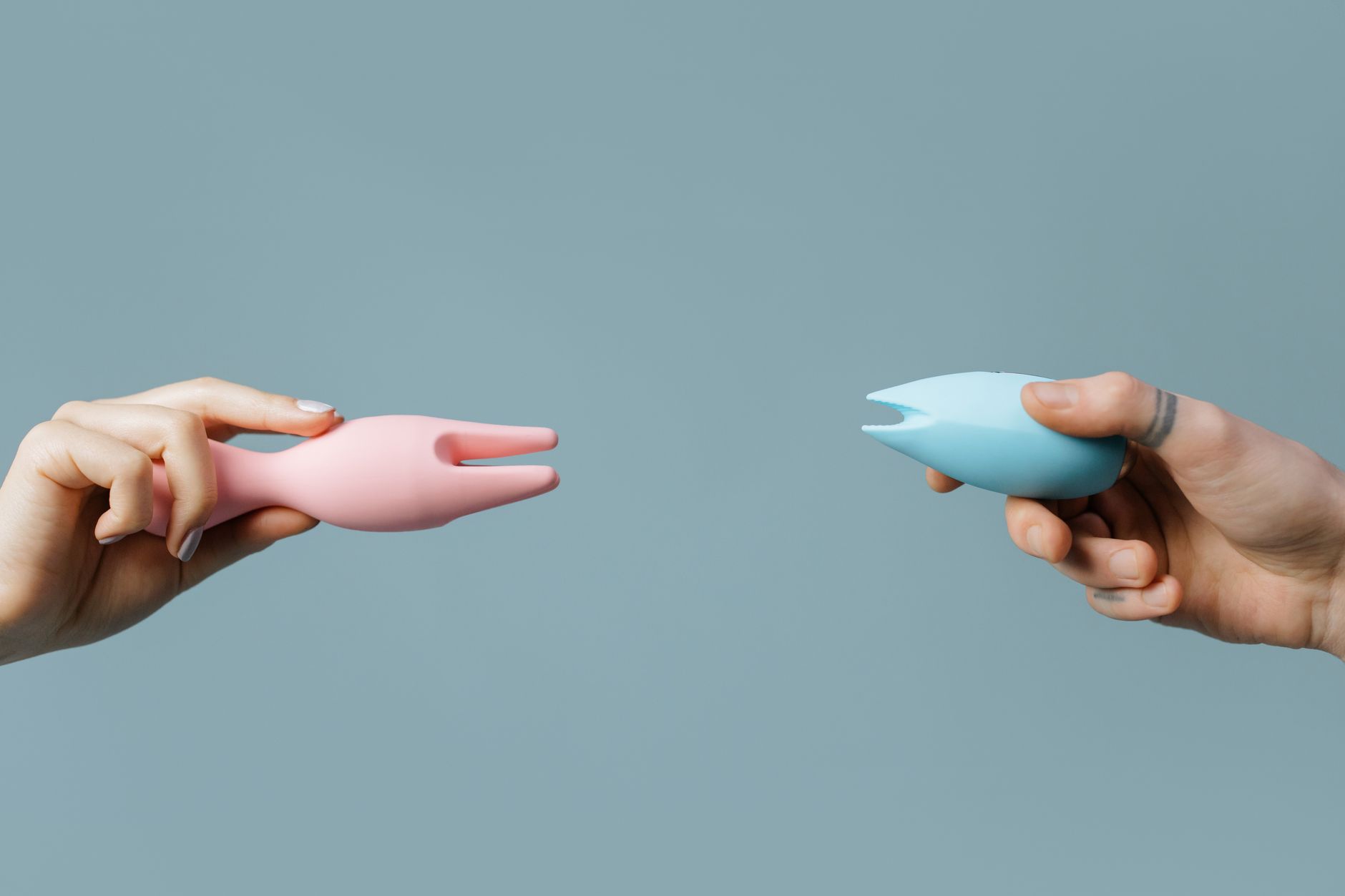
Photo by cottonbro studio on Pexels
The three-step reconnection protocol
Step one: Environment anchoring. Your brain won't come into your body if it's got seventeen escape routes. Silence your phone. Close the laptop. This isn't about creating "mood." It's about removing competing input. When there's nothing else to think about, thinking about nothing becomes harder to do.
Step two: Sensation layering. Start with non-genital touch. Your shoulders, your thighs, your belly. This wakes up your proprioception (your body's sense of where it is in space). After five to ten minutes of this, your brain is literally more present in your physical form. Then bring the lemon vibrator in. Your attention is already somewhat engaged with your body, so the vibrator isn't interrupting silence. It's joining a conversation that's already started.
Step three: Rhythm syncing. Start on the lowest pattern setting. The goal isn't intensity. It's consistency. Let yourself feel the rhythm without trying to chase the sensation. After two minutes, if you want to increase intensity, go up one level. This isn't a race. The point is to train your brain to stay with the feeling instead of fleeing from it.
What to do when your mind still wanders
It will. That's not failure. That's what minds do.
When you notice you've drifted, don't panic or get frustrated. Just notice it. "Oh, I'm thinking about the email." Then redirect. Not by forcing your thoughts back. By asking your clitoris a question: "What does this feel like right now? Pressure or tingling? Concentrated or diffused?"
This sounds silly, but it works because it turns distraction into active inquiry. Your brain is still processing information, so it stays engaged. You're not trying to feel good. You're trying to accurately describe what's happening. And that description is itself a form of presence.
After several weeks of this practice, you'll notice the mental lag shrinking. Your brain and body sync faster. Eventually they stop needing to sync because they never really left each other.
The partner situation (if applicable)
If you're with someone, tell them what's happening. "I'm here, my body's here, but my brain is foggy. I need about five minutes of quiet focus." This removes the performance pressure that often creates the disconnect in the first place.
Some partners want to help. They can. Hand-holding, gentle touch on your arm, nothing demanding. Just presence. But the lemon vibrator work itself needs to be yours. You're rebuilding the relationship between your brain and your body. That's solo work, even if someone's in the room.
When reconnection takes longer than expected
If you've been significantly disconnected for months or years, rewiring takes time. Your nervous system learned to leave your body for survival reasons. It won't come back because you asked nicely.
Try this: use your lemon clitoral vibrator for just three minutes every other day for two weeks. That's it. No orgasm goal, no intensity goal. Just presence practice. Many people find that this low-pressure consistency does more than longer, more intense sessions. Your brain stops treating pleasure time as a performance and starts treating it as a normal body function.
If after four weeks you're still experiencing zero sensation or complete mental absence, consider talking to a therapist. Sometimes the disconnect points to something deeper. Anxiety, past trauma, or depression can flatten sensation in ways that aren't fixed by a better tool. The Lem vibrator is a brilliant piece of engineering, but it's not a substitute for proper support if you need it.
The unexpected upside
People who rebuild this connection often report that pleasure becomes deeper, not just more frequent. Because you're present for it. You're actually experiencing it instead of just having it happen to you.
Your mind and body aren't working against each other. They're working together. And that changes everything.
FAQ
How long does it take to feel mentally present during pleasure again?
Typically two to four weeks of consistent practice. Some people notice a shift in the first week. Others take longer. The key is consistency over intensity. Using your lemon vibrator for five focused minutes every other day works better than one long intense session per week. Your nervous system responds to predictability, not heroic effort.
Can using lemon vibrators actually rewire my brain to reconnect pleasure?
Yes, but not automatically. The vibrator is a tool for focus, not a magic fix. What rewires your brain is the act of staying present repeatedly. Each time you bring your attention back to sensation instead of letting it wander, you're literally strengthening the neural pathways between your brain and your clitoris. Over time, that presence becomes the default instead of the exception.
What if I'm on medication that affects my sensation or focus?
This matters. Certain antidepressants, blood pressure medications, and hormonal contraceptives can genuinely flatten sensation or make focus harder. If you suspect medication is part of the puzzle, talk to your prescriber. Sometimes adjusting timing or switching to a different option helps. The lemon vibrator strategies still work, but you might need to give yourself more time and patience.
Is the mental disconnect related to anxiety?
Often, yes. Anxiety pulls your attention away from pleasure and toward threat-scanning. If you know anxiety is your issue, start with grounding before using your lemon vibrator. Five minutes of deep breathing or a body scan helps settle your nervous system first. Then bring the vibrator in. You're working with your nervous system, not against it.
Should I tell my partner if I'm using lemon vibrators to reconnect with myself?
If you're in a committed relationship, yes. Not because you need permission. Because partnership works better with information. You might say: "I'm working on being more present during intimacy. I'm going to spend some solo time with a vibrator to practice. It's not about you. It's about me rebuilding the connection to my own body." Most partners respect this. Some even find it sexy.
What if the mental disconnect is relationship-based, not just stress-based?
Then the lemon vibrator work is still useful, but it's not the whole answer. Reconnecting with your own pleasure is step one. Addressing the relationship issue is step two. Consider reading how to introduce lemon vibrators to your partner without awkwardness if communication feels stuck. Sometimes using a tool together can actually open doors that words haven't yet.
Sources & Clinical References
The mind-body disconnect during sexual response has been studied extensively in sexual medicine and psychology. Research from the Journal of Sexual Medicine documents how parasympathetic nervous system activation (the "rest and digest" state) is essential for sexual pleasure, and how cognitive distraction directly inhibits this state. Suction-based stimulation has shown measurable effects on clitoral blood flow and nerve activation in studies published in Sexual Medicine Reviews, making it particularly effective for individuals who need focused, pattern-based input to maintain mental engagement.
For more on nervous system regulation and presence during intimacy, the work of therapists trained in Gottman Method approach emphasizes that reconnection requires removing competing stimuli and creating predictable, consistent experiences. This aligns with what we know about how the brain responds to rhythmic input and focused attention practices.