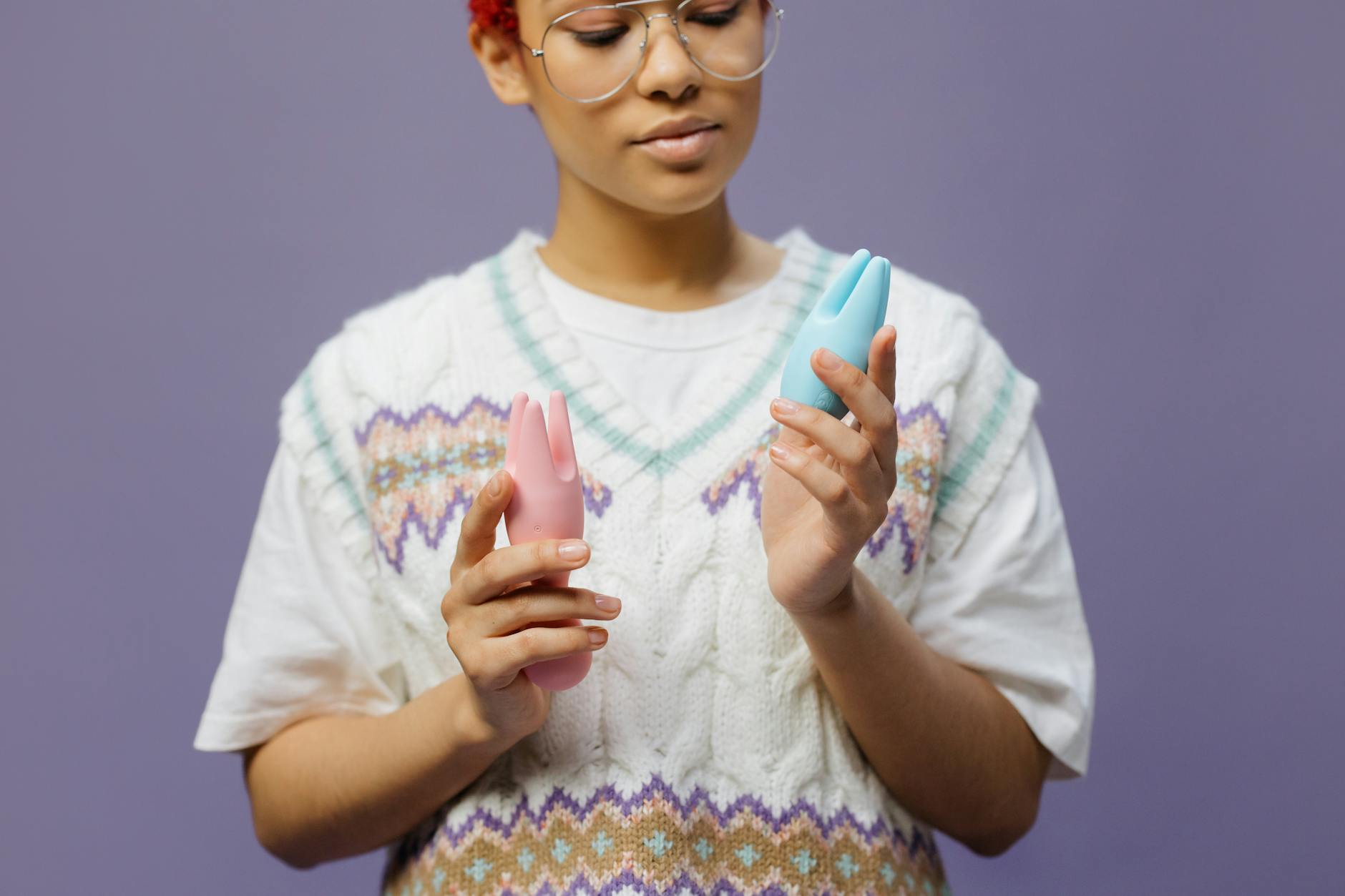
Let's name what's actually happening
Your clitoris hasn't lost sensitivity. Your nervous system has just hijacked the signal. Anxiety doesn't kill desire. It convinces your body that pleasure is secondary to survival, which means blood flow redirects away from your genitals and into your muscles and brain. Everything tightens. Sensation flattens. You're still present, but you feel like you're watching yourself from a distance.
That dissociation isn't a character flaw. It's a protection mechanism that's now protecting you from the one thing you actually want.
How anxiety dampens sensation at the nervous system level
When you're anxious, your sympathetic nervous system fires up. Your body prioritizes vigilance over pleasure. The vagus nerve, which carries sensation from your clitoris to your brain, gets crowded out by stress signals. Blood vessels constrict. Lubrication decreases. The tiny nerve endings in your clitoral tissue that usually fire up immediately become less responsive.
This isn't permanent rewiring. It's a temporary traffic jam in your nervous system. The pathways are still there. They're just not getting through.
Women and people with vulvas who experience anxiety often describe clitoral touch as feeling distant or muffled. Like they're experiencing it through a barrier. Some say it feels like static instead of a clear signal. Others report that their arousal builds mentally but doesn't translate to physical sensation.
The kicker: trying harder to feel it makes it worse. Effort and anxiety are best friends.
Why lemon vibrators work differently when anxiety is in the mix
Lemon clitoral vibrators like the Lem use air-suction technology instead of vibration. This matters when your nervous system is clenched because suction works on a different sensory pathway than friction or traditional vibration.
Here's the mechanism. Suction creates a rhythmic pressure pattern that your nervous system reads as distinct from typical touch. It's novel enough to break through the static. The repetitive pattern also activates something called a gate control mechanism in your spinal cord. Essentially, the lemon clitoral vibrator is so noticeable that it crowds out the anxiety static on the same neural pathway.
You're not forcing sensation. You're giving your nervous system something so clear that it can't ignore it.
Traditional vibrators can feel overstimulating when anxiety is present because they demand a lot of attention and engagement. Suction-based lemon adult toys feel more like a conversation with your body. They're persistent without being aggressive.
The setup that actually works
Timing matters more than you'd think. Using a lemon sucker when your anxiety is actively spiking is like trying to have a conversation during a fire alarm. You can't focus through the noise.
Wait for the moment when your anxiety is present but not at its peak. You might feel it as a slight buzz in your chest or a tightness in your throat. Not calm. Just calmer than the acute panic phase. This is the window where your nervous system can actually learn something new.
Next, set up your physical space to lower background anxiety. Locked door. Phone on silent. Lighting that you control. Anything that reduces your scanning for threat signals opens up bandwidth for sensation.
Start with 5 to 10 minutes of breathing or gentle touch to your neck, collarbone, or inner wrists. These areas have high nerve density and activate your parasympathetic nervous system. You're priming your body to receive sensation instead of defend against it.
Only then bring the lemon vibrator into play. Begin on the lowest setting. Let the sensation register without judgment. Anxiety will try to interpret the sensation as "wrong" or "broken." That's the anxiety talking, not your body.
Retraining your nervous system to trust sensation again
Each time you use a lemon clitoral vibrator while managing anxiety, you're teaching your nervous system that sensation can coexist with calm. This is called interoceptive awareness. You're literally rebuilding the connection between physical sensation and emotional safety.
Expect this to take weeks, not days. Your nervous system didn't get tangled in anxiety overnight. It needs repeated, low-pressure exposure to sensation to believe that touch is safe again.
The best framework I've seen is short, frequent sessions over ambitious extended ones. Three to five minutes, three or four times a week, beats one thirty-minute session once a month. Your nervous system updates on repetition.
During these sessions, focus on noticing sensation without performance pressure. The goal is not orgasm. The goal is the moment when you feel the suction clearly. That's the win. That's the nervous system learning that touch and safety can happen together.
When to add partner involvement
Some people find that using a lemon vibrator alone first is essential. You need to rebuild trust with your own body in private before reintroducing a partner's presence.
Others find that a partner's calm presence actually helps ground them. If you have a partner and want to involve them, the setup is crucial. No performance expectations. No surprise touches. Your partner is there as a stabilizing presence, not to direct or manage your pleasure.
Talk about it beforehand. Be specific: "I'm going to use my lemon vibrator for a few minutes. I might not orgasm, and that's not the goal. I just need to practice feeling sensation without anxiety.