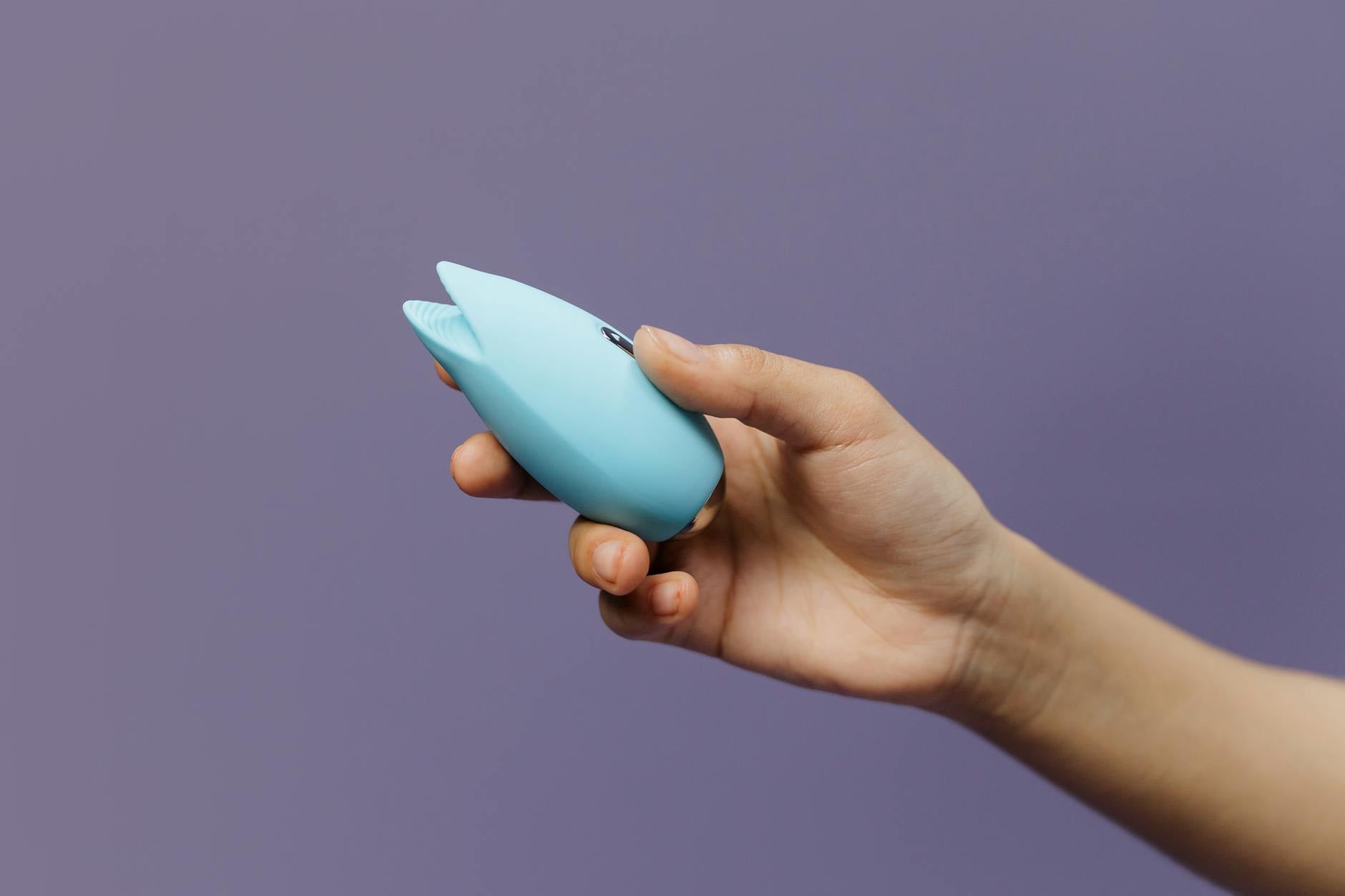
How to Use a Lemon Clitoral Vibrator When Starting Antidepressants
SSRIs and SNRIs change how your body responds to pleasure. A relationship coach on what's actually happening, why your lemon vibrator helps, and how to rebuild sensation without shame.
Starting an SSRI or SNRI is a net positive. Depression and anxiety wreck your sex life far more than the medication trying to fix them does. But that doesn't mean you won't notice changes, and it doesn't mean those changes feel good in the moment.
When you start a serotonin reuptake inhibitor, the medication delays orgasm, flattens arousal, and sometimes makes the whole experience feel muted. This is not in your head. It's a documented side effect that affects roughly 40-60% of people taking SSRIs. The neurotransmitter changes that make you feel less depressed also shift how quickly your nervous system responds to stimulation.
The good news: it's not permanent, and tools like the lemon clitoral vibrator make the transition manageable while your body adjusts.
Your sexual response depends on dopamine (the drive to seek pleasure), norepinephrine (arousal and heart rate), and acetylcholine (lubrication and orgasm). SSRIs boost serotonin, which is excellent for mood. But serotonin at high levels in certain brain regions actually dampens dopamine and norepinephrine.
For most people, this levels out within 6-12 weeks as your body adjusts. During that window, arousal takes longer to build, orgasms are harder to reach, and the whole experience can feel like you're trying to move through water.
A lemon clitoral vibrator works during this adjustment period because it bypasses the delay. Instead of waiting for your nervous system to ramp up on its own, the vibrator's suction mechanism directly stimulates the clitoris at an intensity your body can reliably respond to. You're not fighting your medication. You're working with your current reality.
This is the hardest phase. Your arousal is foggy, your body feels distant, and you might start catastrophizing ("The medication will never work," "My sex life is over"). It won't and it isn't.
During this window, using a lemon clitoral vibrator isn't about achieving an orgasm. It's about maintaining the neural pathway. Your body needs to remember what pleasure feels like, even if that pleasure is muted right now.
Start at pattern 1 or 2 on the Lem vibrator. Don't push for an orgasm. Instead, spend 10-15 minutes exploring sensation without the goal. Your brain is literally rewiring its neurotransmitter balance. You're in recalibration mode, not performance mode.
Around week four, something shifts. You might feel sensation return, but it often comes back differently. Some people describe it as more concentrated. Others say their clitoris feels more sensitive to texture and less responsive to intensity.
This is why the suction design of a lemon clitoral vibrator is so effective. Traditional vibrators rely on rapid oscillation. If your sensitivity is heightened, traditional vibration can feel too sharp. Suction distributes stimulation differently. It creates a gentler, broader sensation that many people find easier to control when they're rebuilding sensitivity after antidepressants.
If the standard patterns feel overwhelming, use lower intensities longer. If they feel numb, try a faster pattern. You're learning your body again, and that's actually useful information.
One of the weirdest things about SSRI-related pleasure changes is that "more intensity" doesn't equal "more sensation." Your body might actually need less intensity, paired with more time.
Lower patterns on the Lem vibrator (1-3) give you precise control. Many people find that extended time at a lower intensity, building slowly over 20-30 minutes, produces results that quick, intense stimulation can't touch. You're asking your body to wake up, not shocking it awake.
Partner play during this phase gets weird too. Your partner might expect that penetration plus vibration equals faster orgasm. It might actually feel worse. If you need to <a href="/blog/how-to-use-lemon-clitoral-vibrators-for-better-orgasms-with-a-new-partner">renegotiate what pleasure looks like with a partner during medication changes</a>, that's normal and important.
Here's what nobody tells you: the pleasure flattening from antidepressants can feel like your sex life is a metaphor for your emotional state. You're on medication because something was wrong, and now something is wrong with sex too. Your brain connects those things.
They're not connected. Your medication is working. Your body is adjusting. And using a tool like a lemon clitoral vibrator during this transition actually reinforces that distinction. You're not waiting passively for your body to cooperate. You're actively choosing pleasure, even if that pleasure looks different right now.
If you're in a relationship, communicate. "I'm adjusting to medication. Orgasms feel harder to reach. I'm using a lemon vibrator to reconnect with sensation. This has nothing to do with attraction or desire." That sentence does heavy lifting.
Most people report that by week 8-12, their baseline sensitivity has returned or stabilized at a new normal. Some people say it's better than before. Others say it's exactly the same. A small group finds it permanently slightly different, and they adjust their approach accordingly.
Once you've hit this window, you actually have more reliable information about your body than you did before you started medication. You know what your pleasure baseline is. You know what works and what doesn't. You've spent weeks paying attention instead of just assuming your body will cooperate.
The lemon clitoral vibrator becomes less of a "compensation tool" and more of a "known quantity." You understand how your body responds to it. That's genuinely useful information moving forward.
If you're starting an antidepressant and also navigating other changes (new relationship, stress, <a href="/blog/how-lemon-vibrators-help-when-you-have-low-libido-from-relationship-stress">relationship conflict</a>, hormonal shifts), isolate what you can control.
You can't control how quickly your neurotransmitters stabilize. You can control whether you use a lemon sucker regularly, whether you communicate with your partner, and whether you let shame about medication side effects rule your sex life. Focus there.
The lemon vibrator is actually a tool for gathering data. You're learning what your body needs in this specific moment. That information is useful whether you've just started an SSRI or you've been on one for five years.
If you're at week 12 and you're still experiencing significant pleasure flattening, talk to your prescriber. This matters. Some people need a dose adjustment. Some people respond better to a different SSRI or to an SNRI instead. Some people add a second medication specifically to counter sexual side effects (like bupropion or buspirone). These are all real options.
Don't white-knuckle through this. Pleasure matters. Your sexual life matters. The medication should make you feel better overall, and that includes sex. If it doesn't after a reasonable adjustment window, advocate for yourself.
Once you've adjusted to your antidepressant, your sex life isn't less than it was before. It's different, and most people find it better because they're actually present and not drowning in anxiety or depression. The lemon clitoral vibrator becomes part of your toolkit, not a workaround for a broken situation.
You've also learned something valuable: how to use a specific tool that works for your body. That knowledge transfers. Whether you're managing new medication, navigating stress, or just exploring what feels good, you now have reliable information about your own pleasure.
For most people, the worst of it improves within 4-12 weeks. Some people see changes within 2 weeks. A small percentage find that changes persist or settle into a new normal. Everyone's timeline is different, and that's not a reflection of whether the medication is working. It's just individual neurobiology. If you're past 12 weeks and nothing has shifted, check in with your prescriber.
Completely safe. There are no interactions between clitoral vibrators and any antidepressant medication. The concern isn't safety. It's that your body might not respond the way it did before medication. Using a tool like the lemon clitoral vibrator actually helps during this adjustment because you're not relying on your nervous system to work harder. You're working with where your body actually is.
Almost certainly yes. Right now, your nervous system is in flux. Once it adjusts, your sensitivity will either return to baseline or stabilize at a new normal. At that point, the vibrator might feel more intense, less intense, or about the same. That's useful information. You're learning your body's actual response, not its medicated response.
It's normal to experience flattened desire, which is different from losing interest entirely. Flattening means it takes more to get aroused. Loss of interest is less common but does happen. If you're not feeling arousal at all after 2-3 weeks, that's worth discussing with your prescriber. Sometimes a timing adjustment (taking the medication at a different time of day) helps. Sometimes a different medication works better for you.
Yes. Directly. "I'm adjusting to antidepressant medication. During this phase, orgasms are harder to reach and arousal feels slower. This is a known side effect and it usually improves. Here's what helps." That conversation prevents your partner from internalizing the changes as a reflection on attraction or your relationship. It keeps you both on the same team.
Use this framework: "The medication is helping my depression. During adjustment, my body needs more direct stimulation to feel pleasure. The vibrator isn't replacing you. It's helping me recalibrate while my brain adjusts to the medication. In a few weeks to months, this usually stabilizes." If your partner can't accept that, that's a different conversation to have, possibly with a couples therapist. <a href="/blog/how-to-use-lemon-clitoral-vibrator-to-explore-partnered-pleasure-as-a-couple">Exploring how to use pleasure tools together as a couple</a> can actually strengthen your dynamic if you frame it as collaborative.
You started an antidepressant because your mental health mattered. Your sex life matters just as much. Using a lemon clitoral vibrator during medication adjustment isn't a workaround for a problem. It's a smart strategy for maintaining pleasure while your nervous system recalibrates.
Most people find that by month three, their baseline has shifted and adjusted. Some find their sex life is better than it was before because they're present instead of anxious. All of that is possible, and tools like the lemon vibrator help bridge the gap between now and then.
If you have questions about how to use pleasure tools during medication transitions, or if you're struggling with the emotional side of this adjustment, reach out. You don't have to navigate this alone.